
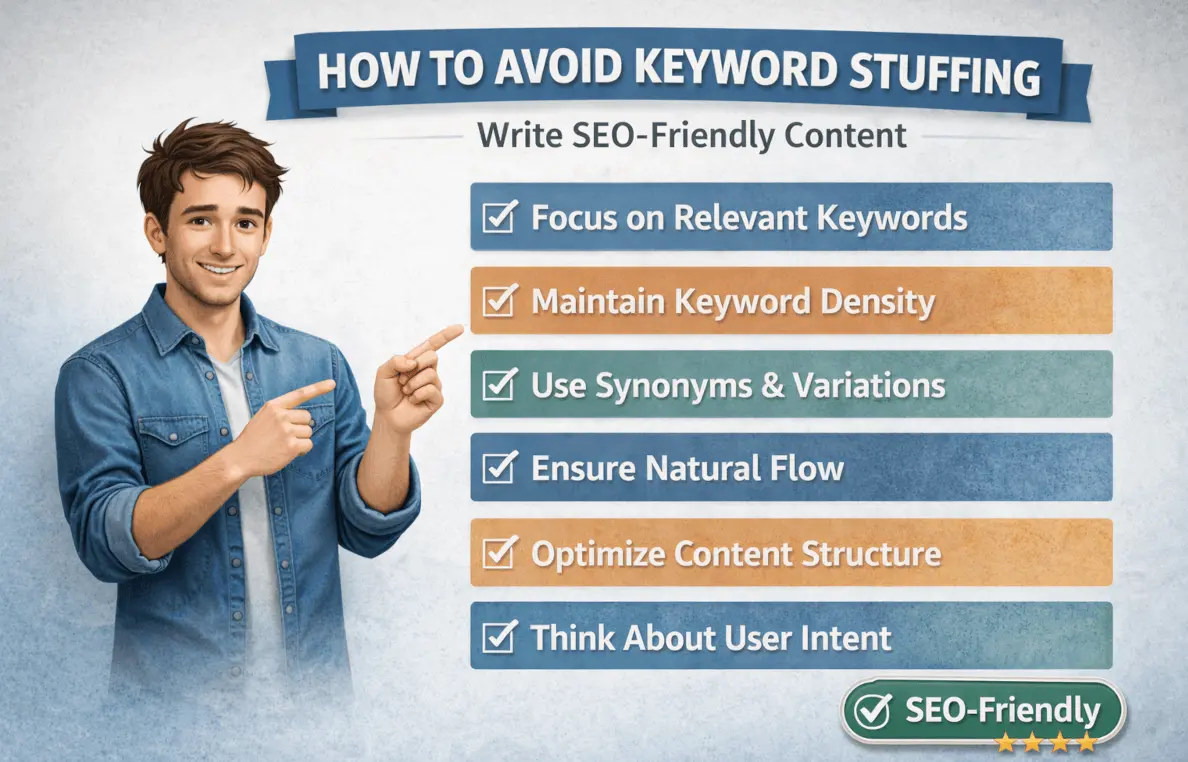
Writing blog posts that rank in search engines is a core skill for bloggers, especially those learning how to start a blog in 2025. Yet many writers fall into the trap of keyword stuffing, thinking it will boost SEO. In reality, this outdated tactic can harm your rankings, reduce readability, and damage trust with your audience.
What You’ll Learn (Quick Summary)
- How to rank without keyword stuffing
- Why search intent matters more than keyword density
- How to structure blog posts for modern search engines
- Practical formatting tips that improve discoverability
To rank without keyword stuffing, focus on search intent, semantic relevance, structured formatting, and clear answers to user questions. Modern search engines prioritize content depth, readability, and usefulness over repetitive keyword usage. Well-structured headings, FAQs, and concise explanations improve both SEO and AI visibility.
You’ll learn strategy, structure, and long-term optimization, including how your posts can link to broader content like SEO strategies for bloggers in 2025 to strengthen authority.
What Is SEO Content?
SEO content is any content created to satisfy both user intent and search engine ranking criteria. It answers real questions people are searching for while following technical and strategic standards that help search engines understand and index it.
According to Google Search Central, content should be helpful, people-first, and informative. This reflects a shift away from tactics like keyword stuffing, emphasizing quality, clarity, and trustworthiness over repeated phrases.
Good SEO content typically:
- Meets user intent – It directly addresses what the searcher is looking for, whether that’s information, guidance, or solutions.
- Is organized logically – Headings, subheadings, and paragraphs make content easy to scan for both readers and search engines.
- Uses relevant keywords in context – Keywords appear naturally alongside related terms that give search engines better context.
- Provides unique value – Offering examples, visuals, or actionable tips keeps readers engaged longer than generic content.
A strong grasp of blogging mistakes to avoid in your first year can help beginners avoid common pitfalls while creating SEO-friendly content. Combining readability with strategic optimization consistently drives traffic, engagement, and long-term authority.
For further reading on crafting high-quality SEO content, check out Moz’s guide to on-page SEO and HubSpot’s SEO content guide.
Why Keyword Stuffing Hurts More Than It Helps
Keyword stuffing is the practice of overusing the same phrase to manipulate search rankings. While it might seem like a shortcut, it often backfires because both search engines and readers detect unnatural repetition.
The main problems with keyword stuffing include:
- Feels unnatural – Repeating the same phrase makes sentences awkward and harder to read.
- Raises bounce rates – Visitors who struggle to read repetitive content leave quickly, signaling poor quality to search engines.
- Triggers penalties – Overloaded pages can be flagged as spam, lowering rankings or even removing content from search results (Google Search Central Spam Policies).
- Limits authentic writing – Focusing on frequency instead of ideas constrains your style and engagement.
Using keywords strategically, alongside related terms and context, signals relevance to search engines without sacrificing readability or credibility. Applying storytelling frameworks that boost blog engagement also helps your content flow naturally.
Keyword Research: Find the Right Phrases
Before writing, understand what topics and terms your audience actively searches for. Keyword research ensures you address real user intent, instead of guessing.
Tools for Keyword Research:
- Google Keyword Planner – Free insights on search volume, competition, and related ideas.
- Ahrefs Keywords Explorer – Traffic estimates, difficulty scores, and competitor analysis.
- SEMrush – Competitive insights to track keywords and plan long-term content.
- Ubersuggest – Beginner-friendly tool for keyword suggestions and SEO difficulty.
Tips for Effective Keyword Research:
- Focus on intent, not just volume – High search volume doesn’t guarantee engagement.
- Look for long-tail keywords – Phrases like “how to write blog posts without keyword stuffing” often have less competition.
- Analyze competitors – See which keywords similar blogs rank for, then create more comprehensive content.
- Consider related terms – Using synonyms and contextually related words improves relevance without repetition.
Keyword research also supports other strategies, like affiliate marketing basics or SEO vs. paid ads planning. Tools such as best AI writing assistants for bloggers in 2025 can help identify opportunities while keeping content natural.
For a detailed guide to keyword intent, see Moz’s keyword research guide.
Focus on Intent, Not Density
Instead of repeating exact phrases, understand why users search for them:
- Are they seeking information?
- Comparing options?
- Ready to take action?
For instance, when writing about blogging, related phrases might include:
- “how to write engaging blog posts”
- “blog post structure tips”
- “SEO tips for bloggers”
These variations cover the topic naturally, reducing the need for repetitive keywords. Focusing on intent works similarly to the psychology of pricing digital products for bloggers — it’s about meeting the audience at the right stage.
How to Write SEO‑Friendly Content Without Overstuffing
1. Start With a Clear Structure
Use headings (H1, H2, H3) to organize your post and include keywords naturally in some of them.
Example structure:
- Introduction
- What Is SEO Content?
- Why Keyword Stuffing Hurts
- Keyword Research Tips
- Best Writing Practices
- Readability & Engagement
- Monitoring & Optimization
- FAQ
This helps users and search engines scan your post efficiently.
2. Use Keywords Naturally
Best practices:
Element | Best Practice |
Title | Include primary keyword naturally |
Introduction | Use the main phrase once early to set context |
Subheadings | Sprinkle variations (LSI keywords) |
Meta description | Summarize topic with keyword relevance |
Body text | Write for humans first, search engines second |
LSI keywords signal context to search engines without repetition.
3. Write for Humans
Focus on readers first. Include:
- Clear explanations
- Relevant examples
- Conversational tone
- Problem-solving content
This principle applies beyond blogging, such as when learning how to automate social media posting without losing authenticity. For insights on writing naturally, see HubSpot’s guide on writing for humans.
Optimizing Readability and Engagement
Even the best research fails if readers don’t stay on the page. Engaging content encourages shares, links, and repeat visits.
Improve readability with:
- Bullet points – Break up text and highlight key ideas.
- Short paragraphs – 2–3 sentences each improves scanability.
- Multimedia – Images, charts, and tables support points and keep readers engaged. Use descriptive alt text, but avoid forced keywords.
Readable posts also perform well on platforms like Pinterest, where scannable content drives clicks. For tips on readability and user engagement, see Nielsen Norman Group’s usability guidelines.
Internal Linking: Strengthen Your Site Structure
Internal links help search engines understand your site and guide readers to related topics. For example:
- How to Start a Blog in 2025 for foundational guidance
- SEO Strategies for Bloggers in 2025 for advanced SEO techniques
- How to Make Money Blogging to link SEO with monetization strategies
Use anchor text naturally:
A solid grasp of basic blogging principles, like those in our guide on how to start a blog in 2025, makes crafting SEO‑friendly posts easier.
How to Check if Your Content Is SEO‑Friendly
After writing, evaluate whether your post meets SEO standards.
Checklist:
- ✅ Does it satisfy user intent?
- ✅ Are keywords used naturally?
- ✅ Are headings meaningful and structured?
- ✅ Does the page load quickly and display well on mobile?
- ✅ Has the content been proofread for grammar and flow?
Tools:
- Google Search Console – Measures clicks and impressions
- PageSpeed Insights – Evaluates performance
- Yoast SEO or Rank Math – On-page SEO recommendations
Monitor, Adjust, Repeat
SEO is ongoing. Regular monitoring helps you see what works and where improvements can yield meaningful gains.
Metrics to track:
- Organic traffic changes
- Average ranking position
- Click-through rates (CTR)
- Engagement metrics: time on page, scroll depth, bounce rate
Small tweaks, like updating examples or refreshing internal links, can make a big difference. For long-term SEO trends, see Search Engine Journal’s SEO updates.
SEO FAQs
What is good SEO content?
Content that thoroughly answers user intent, uses keywords naturally, and is structured for humans and search engines.
What is SEO content?
Writing designed to rank by balancing usefulness for readers with technical optimization for search engines.
How do I check if my content is SEO‑friendly?
Use tools like Google Search Console, SEO plugins (Yoast, Rank Math), and readability analyzers.
How do you write SEO‑friendly content?
Start with keyword research, outline logically, integrate terms naturally, optimize headings and meta data, format for readability, then refine with SEO tools.
Final Thoughts
Writing blog posts that rank without keyword stuffing requires strategy and a reader-first approach. Prioritize clarity, relevance, and usefulness over outdated SEO tricks. Linking thoughtfully across your content ecosystem — including storytelling frameworks, Pinterest marketing, and affiliate marketing — strengthens authority and builds trust with your audience, whether they are newcomers or seasoned bloggers.