

Many people start blogs as hobbies. They write about travel, food, technology, or personal experiences without thinking about the long term strategy. But if you want your blog to grow and generate income, you need something more structured.
That is where a blogging business plan becomes essential.
Building a blogging business plan means creating a clear strategy for how your blog will grow, attract readers, and generate revenue. Instead of publishing content randomly, a structured plan helps you define your niche, build an audience, and develop sustainable income streams.
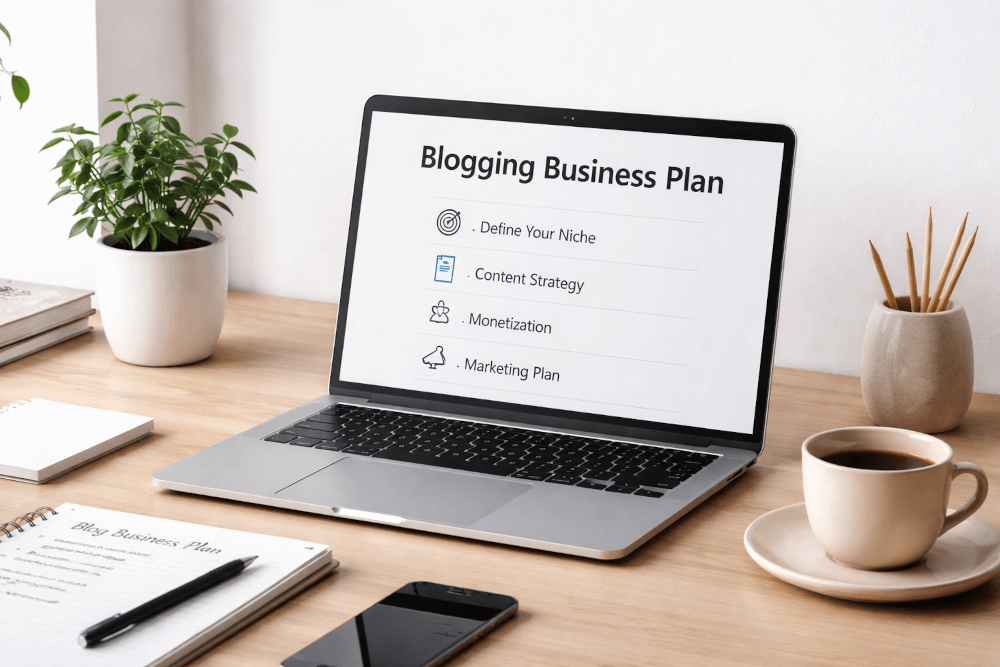
A simple blogging business plan usually includes the following steps:
- Choose a niche and target audience
Identify the topic your blog will focus on and the people you want to help. - Define your value proposition
Explain what makes your blog unique and why readers should follow it. - Create a content strategy
Plan the main topics you will write about and how often you will publish. - Develop monetization strategies
Decide how your blog will generate revenue through advertising, affiliate marketing, digital products, or services. - Plan your marketing and traffic strategy
Use SEO, social media, and email marketing to attract readers. - Set financial and growth goals
Estimate expenses, potential revenue, and long-term growth opportunities.
These elements form the foundation of a successful blogging business plan. By organizing your ideas into a structured plan, you can transform your blog from a hobby into a sustainable online business.
In this guide you will learn how to build a blogging business plan step by step. By the end, you will have a clear roadmap for turning your blog into a sustainable online business.
If you are just starting your blogging journey, understanding how to start a blog in 2026 can help you set the right foundation before creating a blogging business plan.
What Is a Blogging Business Plan?
A blogging business plan is a structured strategy that explains how your blog will grow, attract readers, and generate revenue. Just like any startup, a blog needs direction. Without a clear plan, many bloggers struggle with:
- Inconsistent content – Posting irregularly makes it hard to build an audience and establish authority.
- Unclear monetization – Without defined revenue streams, it’s easy to drift without making money.
- Slow traffic growth – Without a strategy, attracting readers can take much longer than necessary.
A blogging business plan helps solve these challenges by clearly defining:
- Your niche – The specific topic or focus of your blog that sets you apart from others.
- Your audience – Who you’re writing for and what problems or questions you aim to solve.
- Your content strategy – What type of content you’ll create, how often, and how it aligns with your audience’s needs.
- Your revenue streams – Ways to monetize your blog, from affiliate marketing and sponsored posts to selling products or services.
- Your marketing approach – How you’ll promote your blog, attract readers, and grow your online presence.
According to the Small Business Administration, having a business plan improves success rates because it forces entrepreneurs to clarify goals and strategies. Blogging works the same way. If you want your blog to become a real business, planning matters—and a solid blogging business plan is the roadmap that can help you get there.
Step 1: Define Your Blog Niche and Audience
Every successful blogging business plan begins with a clear niche.
Your niche determines the type of content you create and the audience you attract. Without a niche, it becomes difficult to build authority or rank in search engines.
Examples of profitable blog niches include:
- digital marketing
- personal finance
- remote work
- productivity
- technology tools
Choosing a niche should involve both passion and demand. You want a topic you enjoy writing about but also one people actively search for.
Tools like Google Trends help identify topics that are gaining interest over time.
Once you define your niche, you must understand your audience. Ask questions like:
- What problems do they face?
- What information are they searching for?
- What type of content helps them most?
Understanding your audience is a foundational part of any effective blogging business plan.
Step 2: Define Your Blog’s Value Proposition
Your value proposition explains why someone should read your blog instead of thousands of others. It’s the core promise that communicates the unique benefit readers get from your content. In a strong blogging business plan, this section answers one simple question:
What makes your blog unique?
Your blog might stand out through:
-
Beginner‑friendly tutorials – Step‑by-step guides that make complex topics accessible, helping readers take action immediately.
-
Personal experience and storytelling – Sharing your own journey and lessons learned builds trust and a relatable connection with your audience.
-
Data‑driven guides – Offering insights backed by research, analytics, or case studies demonstrates authority and credibility.
-
Curated resources – Bringing together the best tools, tips, and references saves your readers time and positions your blog as a go-to resource.
For example, Voyager focuses on helping bloggers and digital nomads build successful blogs while connecting with a supportive community of creators. It combines actionable tutorials, real-life examples, and curated content to provide value to both beginners and experienced bloggers.
Clearly defining your value proposition does more than differentiate your blog from competitors — it shapes your brand identity, guides your content strategy, and ensures that every post consistently delivers on your promise to readers. When your audience immediately understands why they should return, your blog becomes a trusted resource rather than just another website.
Step 3: Content Strategy for Your Blogging Business Plan
Content is the core of every blog business.
A strong blogging business plan includes a structured content strategy that focuses on long term growth.
Start by identifying your pillar topics. These are the main subjects your blog will consistently cover.
For example:
- blogging guides
- SEO strategies
- content creation tools
- online business advice
Each pillar topic can support dozens of articles.
Search engine optimization also plays a major role in your content strategy. According to Search Engine Journal, SEO driven content continues to be one of the most sustainable ways to generate long term website traffic.
Publishing consistently builds authority and helps search engines trust your website. Many successful bloggers follow a weekly or biweekly schedule.
A well structured content strategy is one of the most important sections of a blogging business plan.
Step 4: Monetization Strategy
A blog becomes a business when it generates revenue. Simply publishing content isn’t enough to turn your blog into a sustainable venture—you need a plan for how it will make money. Your blogging business plan should clearly outline your revenue strategies so you know exactly how your efforts will translate into income.
Common blog monetization strategies include:
- Affiliate marketing – Promote products or services through your blog and earn a commission when readers make purchases using your referral links. This is a popular way for bloggers to earn passive income while providing value to their audience.
- Display advertising – Ad networks pay you based on traffic, impressions, or clicks on the ads displayed on your blog. This works best once your site attracts consistent visitors.
- Digital products – Many bloggers create and sell their own products, such as:
- Online courses
- Ebooks
- Templates
- Membership programs
Offering digital products lets you leverage your expertise while generating scalable income.
- Online courses
- Services – Some bloggers monetize their skills by offering consulting, coaching, freelance work, or other professional services directly through their blog.
If you want a deeper breakdown of revenue strategies, explore Voyager’s guide on monetization strategies in blogging in the article about monetizing your blog.
Diversifying your income streams makes your blogging business plan stronger, more sustainable, and less dependent on a single source of revenue. By planning ahead, you’re setting up your blog not just as a hobby, but as a legitimate business that can grow over time.
.
Step 5: Marketing and Traffic Plan
Traffic is the fuel that powers blogging income. Without readers, even the best content won’t generate results. That’s why a smart blogging business plan always includes a marketing strategy to attract and retain visitors. Knowing where and how to reach your audience is just as important as creating great content.
The most effective blog traffic channels include:
- Search Engine Optimization (SEO) – SEO helps your articles appear in search results when people are looking for information. Google’s own SEO documentation shows how quality content and clear structure help rankings: https://developers.google.com/search/docs
- Social Media Marketing – Platforms like X, Pinterest, and LinkedIn can drive consistent traffic when used strategically. Sharing your content, engaging with communities, and using platform-specific tactics can help you reach new audiences and encourage sharing (see social strategy tips: Social media marketing: What it is and how to build your strategy)
- Email Marketing – Building an email list allows you to stay connected with your readers and nurture a loyal audience. Many bloggers consider email the most valuable marketing channel because it provides direct access to people who already trust your content (intro to email marketing: https://mailchimp.com/email-marketing/).
Including marketing strategies in your blogging business plan ensures you have a clear roadmap for attracting and retaining readers. After all, traffic is not just a number—it’s the foundation that enables your blog to grow, generate revenue, and become a sustainable business.
Step 6: Financial and Growth Planning
Even small blogs require some financial planning. To turn your blog into a sustainable business, your blogging business plan should include estimates for both expenses and potential revenue. Understanding the financial side from the start helps you make informed decisions and avoid surprises down the road.
Common blogging costs include:
- Domain and hosting – Securing a memorable domain name and reliable hosting is essential for your blog’s foundation.
- Website design – A clean, professional theme or custom design enhances user experience and credibility.
- SEO tools – Tools for keyword research, analytics, and optimization help your content reach the right audience.
- Email marketing platforms – Managing newsletters and growing an email list often requires a subscription-based service.
- Marketing expenses – Paid ads, social media campaigns, or influencer collaborations may be part of your strategy to attract readers.
Financial projections don’t have to be perfect. The goal is to gain a realistic understanding of how your blog might grow and where your investments can have the most impact. For bloggers who want to build a long-term online company, exploring the fundamentals of building an online business can provide deeper insights into scaling, monetization, and sustainable growth.
Including financial projections in your blogging business plan makes it more strategic, actionable, and better prepared for the future. Even a rough estimate helps you prioritize efforts, track progress, and make smarter decisions as your blog grows.
Step 7: Operations and Workflow
Many bloggers underestimate the importance of workflow. Consistency is key to growing a blog, and having a clear plan for how you manage tasks can make all the difference. A blogging business plan should define how you handle essential activities such as:
- Content creation – Planning topics, conducting research, and writing posts efficiently.
- Editing – Reviewing content for clarity, accuracy, and SEO before publishing.
- Publishing – Scheduling posts, formatting, and making sure your site looks polished.
- Promotion – Sharing content across social media, email lists, and other channels to reach your audience.
Creating systems for these tasks helps you stay consistent without feeling overwhelmed. Many bloggers use productivity tools like Notion or Trello to organize content calendars, track blog growth, and manage deadlines. Automation tools can also streamline repetitive tasks, such as social media scheduling, email campaigns, or even simple SEO checks.
Efficient workflows allow you to focus more on creativity while keeping your blogging business plan structured and actionable. When you know exactly how content moves from idea to published post, it becomes easier to maintain momentum and grow your blog sustainably.
Measuring Success and Scaling Your Blog Business
A blogging business plan is not static—it evolves as your blog grows and your goals change. Successful bloggers regularly measure performance to understand what’s working and where improvements are needed. Key metrics to track include:
- Organic traffic – The number of visitors coming from search engines, which indicates how well your content ranks.
- Email subscribers – Growing your list shows how effectively you’re building a loyal audience.
- Conversion rates – How well readers take desired actions, such as signing up for a newsletter or purchasing a product.
- Affiliate revenue – Earnings from referrals help gauge the effectiveness of your monetization strategies.
- Search rankings – Monitoring keyword performance ensures your content remains visible to potential readers.
Tools like Google Analytics and other tracking platforms make it easy to monitor these metrics and understand audience behavior.
As your blog grows, scaling opportunities may include:
- Hiring writers – Expand your content output without sacrificing quality.
- Launching digital products – Offer courses, ebooks, or membership programs to diversify revenue.
- Expanding into new content formats – Podcasts, videos, or infographics can attract new audiences.
- Building a community around your brand – Engaged readers are more likely to return, share your content, and support your offerings.
Regularly monitoring performance ensures that your blogging business plan continues to evolve and improve. By tracking results and identifying growth opportunities, you can make informed decisions that keep your blog moving forward as both a creative platform and a sustainable business.
Common Mistakes When Creating a Blogging Business Plan
Many new bloggers struggle because they skip planning or focus on the wrong priorities. These common mistakes can slow growth and make blogging feel more difficult than it needs to be.
- Trying to target too many niches – Without a clear focus, it’s difficult to build authority or attract a dedicated audience. Choosing a specific niche helps your blog stand out and makes content creation more manageable.
- Ignoring SEO – Search traffic remains one of the most reliable ways to grow your blog. Failing to optimize your content for search engines can limit your reach and slow audience growth.
- Expecting quick income – Blogging is rarely an overnight success. Most blogging businesses take months or even years to generate meaningful revenue. Patience, consistency, and strategy are key.
- Not defining monetization strategies – A clear revenue plan is essential for turning your blog into a sustainable business. Without it, you risk creating content without seeing financial results.
Avoiding these mistakes can dramatically increase your chances of success and make the process of how to start a blog smoother and more effective. By focusing on planning, prioritizing the right strategies, and being patient, you’ll set a solid foundation for long-term growth.
FAQs
What is a blogging business plan?
A blogging business plan is a strategic document that outlines how a blog will generate traffic, build an audience, and earn revenue. It includes sections such as niche research, content strategy, marketing plans, and monetization methods.
Do bloggers really need a business plan?
Yes. Bloggers who treat their blog as a business are more likely to grow consistently and generate income. A blogging business plan provides structure and long term direction.
How long should a blogging business plan be?
A blogging business plan can be simple. Many bloggers create a 2 to 5 page strategy document covering niche, content, traffic sources, and monetization.
How do bloggers make money?
Bloggers commonly earn money through affiliate marketing, advertising, digital products, sponsorships, and services.
How long does it take for a blog to become profitable?
Many blogs take 6 to 18 months before generating significant income. A strong blogging business plan helps speed up this process by focusing on proven strategies.
Final Thoughts
A successful blog rarely happens by accident. Behind every profitable blog is a clear strategy.
Creating a blogging business plan helps you define your goals, organize your content strategy, and build sustainable revenue streams.
When blogging is treated like a real business, growth becomes far more predictable.
For bloggers who want to build long term success, a well structured blogging business plan is one of the most valuable tools you can create.

1 comment
I appreciate the real-life examples you added. They made it relatable.